|
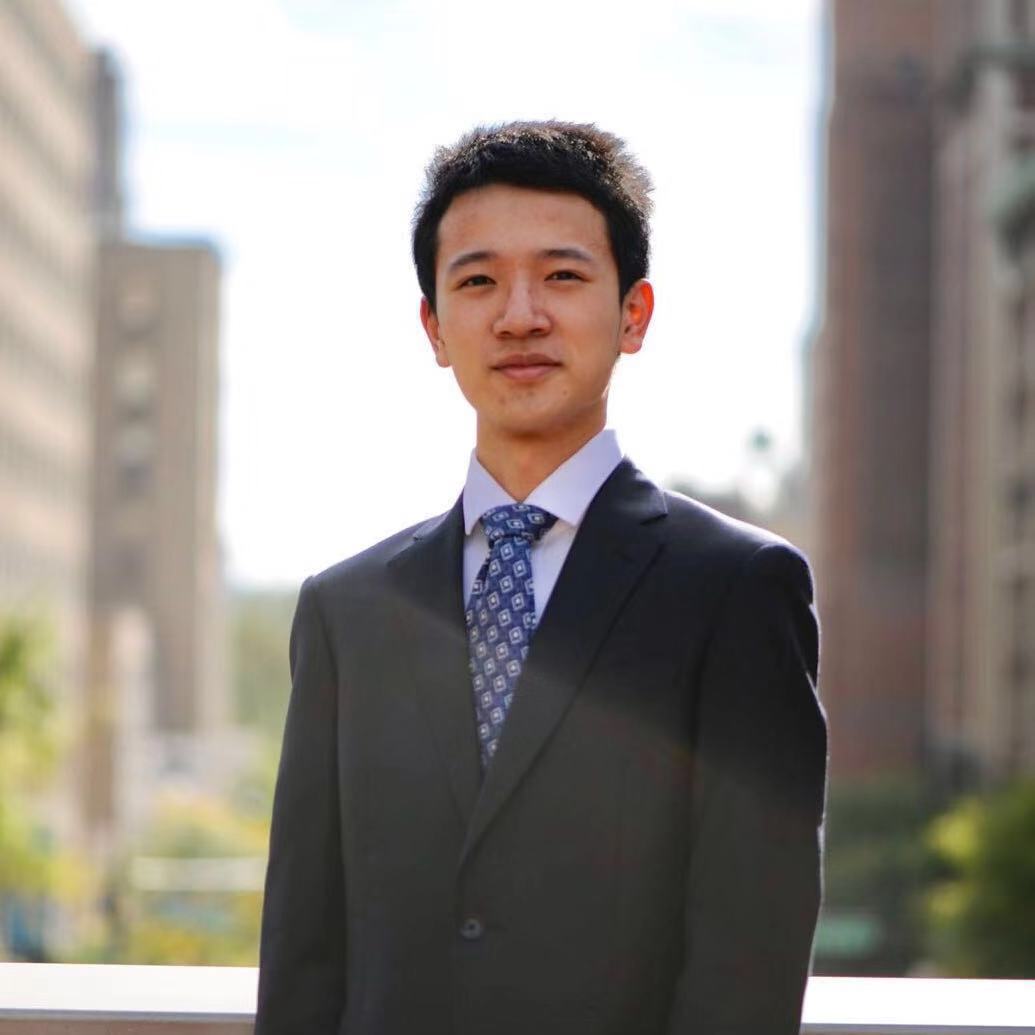
I am a Member of Technical Staff (Research Scientist) on the Code RL team at Anthropic, where I train Claude models toward stronger coding and agentic capabilities. Previously, I was a Research Scientist on the Alignment team at Anthropic, working on safety-driven pre-training, chain-of-thought explainability, and AI control. Before Anthropic, I completed my PhD in Computer Science at Columbia University in summer 2024, co-advised by Prof. Kathy McKeown, Prof. He He, and Prof. Zhou Yu. During my PhD, I worked on explainability and few-shot learning. I also received my bachelor's degree in Computer Science at Columbia University in April 2021. Email / CV / Google Scholar / Twitter / Github |
|
|
|
|
Yanda Chen, Mycal Tucker, Nina Panickssery, Tony Wang, Francesco Mosconi, Anjali Gopal, Carson Denison, Linda Petrini, Jan Leike, Ethan Perez, Mrinank Sharma Anthropic, 2025 blog We remove harmful CBRN-related content from pretraining data using a classifier and pretrain models from scratch on the filtered dataset. This reduces performance on a harmful-capabilities evaluation by 33% relative to a random baseline, while causing no significant drop on standard benchmarks including MMLU, Code, and Prose. |
|
Yanda Chen, Joe Benton, Ansh Radhakrishnan, Jonathan Uesato, Carson Denison, John Schulman, Arushi Somani, Peter Hase, Misha Wagner, Fabien Roger, Vlad Mikulik, Sam Bowman, Jan Leike, Jared Kaplan, Ethan Perez Anthropic, 2025 blog / paper We test whether reasoning models faithfully reveal their reasoning by inserting hints into evaluation questions and checking whether models acknowledge using them. Models mention the hints only 25% (Claude 3.7 Sonnet) and 39% (DeepSeek R1) of the time, and outcome-based RL improves faithfulness only up to a plateau, suggesting that chain-of-thought monitoring alone is insufficient to reliably catch misaligned behavior. |
|
Yanda Chen, Chen Zhao, Zhou Yu, Kathleen McKeown, He He ACL, 2024 paper / code We find that the in-context learning ability of language models emerges from parallel structures in the pre-training data: pairs of phrases following similar templates within the same context window. Removing these structures reduces ICL accuracy by 51% (versus 2% from random ablation), and the drop persists even after excluding common patterns such as n-gram repetitions and long-range dependencies. |
|
Yanda Chen, Chandan Singh, Xiaodong Liu, Simiao Zuo, Bin Yu, He He, Jianfeng Gao COLING, 2025 paper / code We propose explanation-consistency finetuning (EC-finetuning), which adapts LLMs to produce more consistent natural-language explanations across related examples by finetuning them on synthetic data constructed to contain consistent explanations. EC-finetuning improves explanation consistency by 10.0% on four finetuning datasets and by 4.5% on seven out-of-distribution datasets. |
|
Yanda Chen, Ruiqi Zhong, Narutatsu Ri, Chen Zhao, He He, Jacob Steinhardt, Zhou Yu, Kathleen McKeown ICML (Spotlight), 2024 paper / code We propose evaluating the counterfactual simulatability of natural-language explanations: whether an explanation lets humans precisely infer a model's outputs on diverse counterfactuals of the explained input. Using two metrics, precision and generality, we find that (i) LLM explanations have low precision, and (ii) precision does not correlate with plausibility. |
|
Yanda Chen, Chen Zhao, Zhou Yu, Kathleen McKeown, He He EMNLP Findings, 2023 paper / code / poster We find that label bias obscures true ICL sensitivity, and that ICL sensitivity is strongly and negatively correlated with accuracy. Motivated by this, we propose SenSel, a few-shot selective-prediction method based on ICL sensitivity. |
|
Yukun Huang, Yanda Chen, Zhou Yu, Kathleen McKeown arXiv preprint, 2022 paper We propose in-context learning distillation, which transfers in-context learning (ICL) ability from large language models to small ones by combining in-context tuning with teacher-student distillation. Experiments on LAMA and CrossFit show that it improves the ICL ability of small language models. |
|
Yanda Chen, Ruiqi Zhong, Sheng Zha, George Karypis, He He ACL, 2022 paper / code / slides We propose in-context tuning, a novel few-shot meta-learning method in which training examples serve as prefix in-context demonstrations for task adaptation. In-context tuning outperforms MAML in accuracy and eliminates several well-known oversensitivity artifacts of few-shot language-model prompting. |
|
Yanda Chen, Chris Kedzie, Suraj Nair, Petra Galuscakova, Rui Zhang, Douglas Oard, Kathleen McKeown ACL, 2021 paper / code / talk / slides We propose a data-augmentation strategy and a rationale-training strategy for cross-lingual sentence selection in low-resource settings, where no labeled relevance judgments are available for training. Our methods achieve state-of-the-art results on three language pairs. |
|
Yanda Chen, Md Arafat Sultan, Vittorio Castelli arXiv preprint, 2020 paper We propose two synthetic training strategies: targeted synthetic pre-training (selecting useful synthetic examples to target the weaknesses of existing models) and synthetic knowledge distillation. Combined, the two techniques yield QA models that are simultaneously smaller, faster, and more accurate. |
|
Ruiqi Zhong, Yanda Chen, Desmond Patton, Charlotte Selous, Kathy McKeown EMNLP, 2019 paper / code / poster We propose a framework to systematically detect and reduce the language bias of deep-learning models in the high-stakes context of gang intervention. |
|
|
|
Microsoft Research, Summer 2023, Mentor: Chandan Singh, Xiaodong Liu
AWS AI, Summer 2021, Mentor: He He IBM Research, Summer 2020, Mentor: Arafat Sultan, Vittorio Castelli |
|
|
|
Avanessians Doctoral Fellowships for Engineering Thought Leaders and Innovators in Data Science. 2023.
Mudd Doctoral Fellowship, Columbia SEAS. 2021. Honorable Mention, CRA Undergraduate Research Awards. 2021. Theodore R. Bashkow Research Award, Columbia Computer Science Dept. 2021. |
|
|
|
Natural Language Processing, Spring 2022 & Spring 2021
Analysis of Algorithms, Spring 2021 & Spring 2020 |
|
Website design from Jon Barron |